Judith Leyster Husband: Meet Jan Miense Molenaer
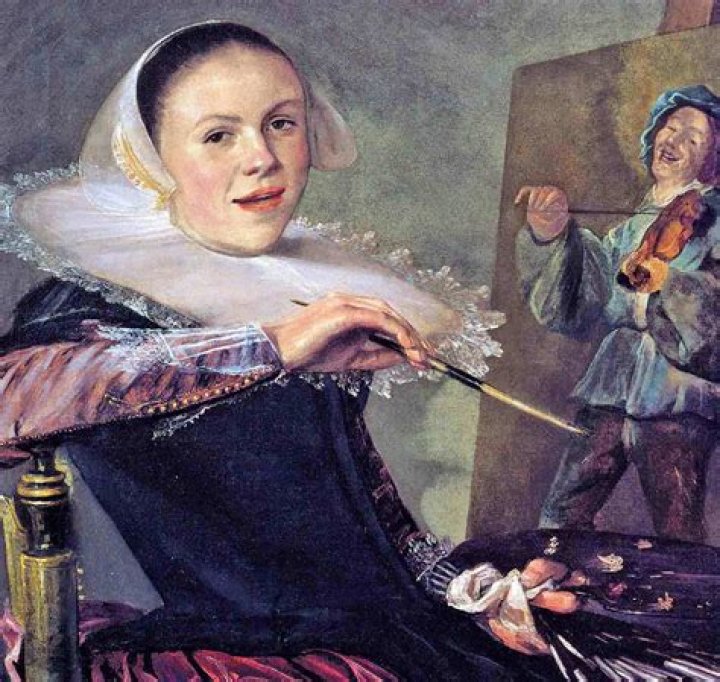
Judith Leyster Husband: Meet Jan Miense Molenaer – Judith Leyster was born on July 28, 1609, in Haarlem, Netherlands, and sadly, she died on February 10, 1660, in Heemstede, Netherlands.
She was a genre, portrait, and still life painter from the Dutch Golden Age. Her contemporaries held a high regard for her work, but after her passing, it was largely forgotten.
Her husband, Jan Miense Molenaer, or Frans Hals eventually came to be given credit for her entire body of work. She was rediscovered in 1893, and academics started giving her works the proper credit.
Her first piece that bears her signature is dated 1629. She was accepted into the Haarlem Guild of St. Luke by the year 1633. She was reportedly the first woman the Guild ever registered, though other sources claim Sara van Baalbergen did so in 1631. The Guild of St. Luke may have accepted dozens of additional female artists during the 17th century.
After joining the Guild, Leyster hired three male apprentices in less than two years. Records indicate that Leyster sued Frans Hals for taking a pupil who switched to his class without first getting the Guild’s approval.
The mother of the student agreed to pay Leyster four guilders in punitive damages, which was less than half of what Leyster had requested. Hals chose to settle his lawsuit by paying a three-guilder fine rather than handing back the apprentice.
For failing to register the apprentice with the Guild, Leyster received a fine. Following her legal battle with Frans Hals, Leyster’s artwork gained more acclaim.
She signed her works with a monogram of her initials JL and a star. Because “Leister” in Dutch meant “Lead star,” which was also the North Star’s common name among Dutch mariners at the time, this was a play on words.
Her father was the proprietor of The Leistar Brewery in Haarlem. She hardly ever signed her name in full on her works.
She specialized in genre portrait-like scenes with one to three figures that usually had happy expressions on their faces and were placed against plain backgrounds. There are many young people and some inebriated men.
Leyster showed a particular degree of innovation in his domestic genre scenes. These are quiet scenes of women at home, frequently illuminated by candles or lamps, as seen from the perspective of a woman.
A few of the museums that have Judith Leyster’s works on display are the Rijksmuseum Amsterdam, the Mauritshuis in The Hague, the Frans Hals Museum in Haarlem, the Louvre in Paris, the National Gallery in London, and the National Gallery of Art in Washington, DC.
In March 2021, Leyster’s works were included in the “Gallery of Honor” at the Rijksmuseum. Leyster, Gesina ter Borch, and Rachel Ruysch are the first female artists to have their work displayed in the gallery.
Judith Leyster Husband: Meet Jan Miense Molenaer
Judith Leyster was married to Jan Miense Molenaer were married for quite a number of years. Jan Miense Molenaer was a Dutch Golden Age genre painter whose style foreshadowed Jan Steen’s work during the Dutch Golden Age.
He shared a studio with his wife, Judith Leyster, also a genre painter, as well as a portraitist and painter of still-life. Frans Hals may have taught both Molenaer and Leyster.
Early in his career, he achieved a style similar to Hals’, but later developed a style similar to that of Dutch genre painter Adriaen van Ostade.
His genre works, such as The Music Makers (Museum of Fine Arts, Budapest), The Duet (Seattle Art Museum), and Family Making Music, frequently depicted musicians (Frans Hals Museum).