Enoch Sontonga’s biography, net worth, fact, career, awards and life story
| Intro | South African composer |
| Was | Musician Poet Composer |
| From | South Africa |
| Type | Literature Music |
| Gender | male |
| Birth | 1 January 1873, Uitenhage, Nelson Mandela Bay Metropolitan Municipality, Eastern Cape, South Africa |
| Death | 18 April 1905, Johannesburg, City of Johannesburg Metropolitan Municipality, Gauteng, South Africa (aged 32 years) |
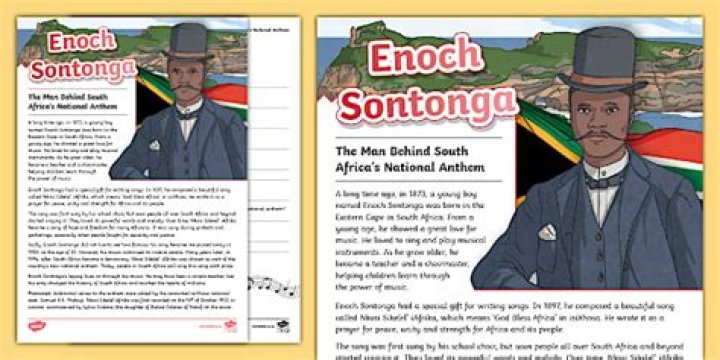
Enoch Mankayi Sontonga (c. 1873 – 18 April 1905) was the composer of Nkosi Sikelel’ iAfrika (God Bless Africa) from then Cape Colony (now part of Eastern Cape province), which has been part of the South African national anthem since 1994. It was the official anthem of the African National Congress since 1925 and is still the national anthem of Tanzania and Zambia. It was also sung in Zimbabwe and Namibia for many years.
Life
Sontonga, a Xhosa, was born in the city of Uitenhage in the Eastern Cape Colony. He trained as a teacher at the Lovedale Institution and subsequently worked as a teacher and choirmaster at the Methodist Mission school in Nancefield, near Johannesburg for eight years.
Sontonga married Diana Mgqibisa and had a son. His wife died in 1929.
The first verse and chorus of Nkosi Sikelel’ iAfrika was composed in 1897 and it was originally intended to be a school anthem. Some sources say he wrote the tune the same year, but others note that the tune (Aberystwyth) was written by Joseph Parry and Sontonga wrote new words. It was first sung in public in 1899 at the ordination of Reverend Mboweni, who was the first Tsonga Methodist minister. Later the Xhosa poet Samuel Mqhayi wrote a further seven verses.
Sontonga died in 1905.
The song started to be more well known after John Langalibalele Dube’s Ohlange Institute’s choir used it. They played it at the South African Native National Congress meeting in 1912. It was sung after the closing prayer and the ANC adopted it as its official closing anthem in 1925. It was recorded in London as “Nkosi sikelel’ iAfrika” in 1923 and it was published by the Lovedale Press in 1927.
For many years the site of Sontonga’s grave was unknown, but it was finally located in the “Native Christian” section of the Braamfontein cemetery in the early 1990s; one of the reasons why his grave could not be found is that it was listed under “Enoch” and not “Sontonga”.
On 24 September 1996, Sontonga’s grave was declared a national monument and a memorial on the site was unveiled by President Nelson Mandela. At the same ceremony the South African Order of Meritorious Service (Gold) was bestowed on Enoch Sontonga posthumously.