All You Need to Know About Lucky Dube: Reggae Artist
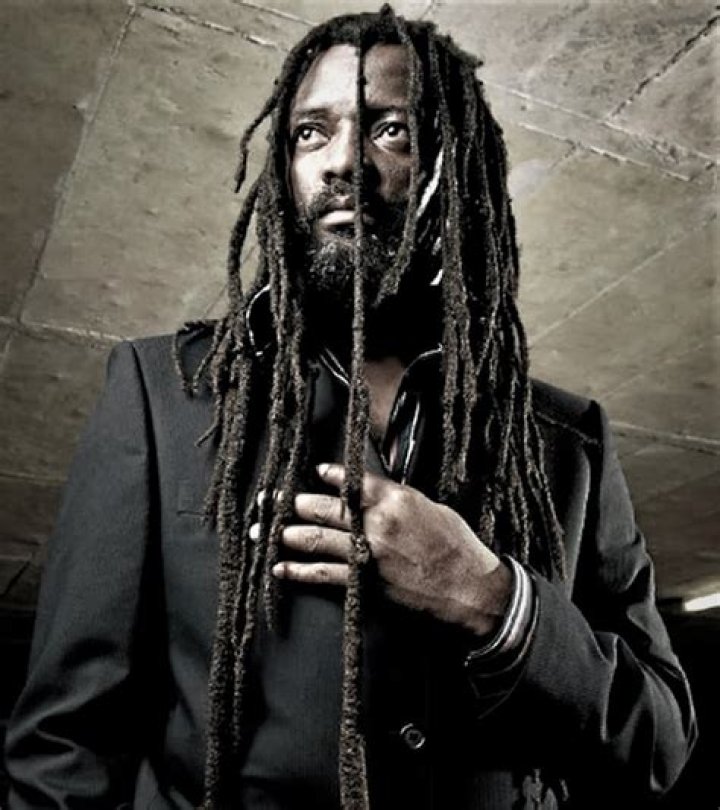
Lucky Dube (August 3, 1964 – October 18, 2007) was a South African reggae musician and Rastafarian. His worldwide record sales earned him the Best Selling African Musician award at the 1996 World Music Awards.
Dube addressed issues affecting South Africans and Africans in general to a global audience through his lyrics. Over a 25-year period, he released 22 albums and was Africa’s best-selling reggae musician of all time. On the evening of October 18, 2007, Dube was murdered in the Johannesburg neighborhood of Rosettenville.
Who is Lucky Dube?
Lucky Dube was born on August 3, 1964, in Ermelo, Transvaal (now Mpumalanga). His parents divorced before his birth, and he was raised by his mother, who named him “Lucky” because she thought his birth was fortunate after a string of miscarriages.
Dube spent much of his youth with his grandmother, Sarah, together with his two siblings, Thandi and Mandla, while his mother relocated for work. He described his grandmother as “his greatest love” in a 1999 interview, saying she “multiplied many things to bring up this responsible individual that I am today.”
What is Lucky Dube’s Nationality and ethnicity?
The renowned Reggae artist holds South African nationality and belongs to an unknown ethnic descent.
What was Lucky Dube’s career?
Dube worked as a gardener in his youth but later opted to attend education to better his economic chances. There, he joined a choir and founded his first musical outfit, the Skyway Band, with some buddies. He discovered the Rastafari movement while at school. Dube joined his cousin’s band, the Love Brothers, at the age of eighteen, playing Zulu pop music known as mbaqanga.
Dube began to learn English after the band signed with Teal Record Company and recorded the album Lucky Dube and the Supersoul. Dube recorded the Afrikaans album Die Kaapse Dans in 1986 with his cousin Richard Siluma, followed by the EP Help My Krap the following year under the name Oom Hansie.
Dave Segal (who later became Dube’s sound engineer) advised him to omit the “Supersoul” part of his name when his fifth album was released. All subsequent albums were released under the name Lucky Dube. Around this time, the singer discovered that some reggae songs he played during shows were being well received by listeners. He felt the socio-political sentiments associated with Jamaican reggae were pertinent to a South African audience in an institutionally racist country, drawing influence from Jimmy Cliff and Peter Tosh.
He chose to experiment with the new musical genre and published the compact album Rastas Never Die in 1984. In compared to the 30,000 units sold by his mbaqanga recordings, the record fared poorly (about 4,000 units). The administration banned the album in 1985 in order to stifle anti-apartheid activities, citing critical lyrics such as “War and Crime” in the song “War and Crime.”
Dube, however, was not discouraged and continued to perform the reggae tracks live while also writing and producing a second reggae album, Think About the Children, in 1985. It sold platinum and established Dube as a prominent reggae singer in South Africa, as well as drawing notice outside of his home country.
What are some of Lucky Dube’s hit songs?
Below are some of the renowned Artist’s hit songs:
- Back to my Roots
- The Way It Is
- Its not easy
- Truth in the world
- House of Exile
- I’ve got you Babe
- Together as one
- Remember Me
- Slave
- Reggae Strong